Education has transformed dramatically over the last decade. From traditional chalk-and-board classrooms to interactive virtual lessons, teaching methods are evolving faster than ever. As an educator who has taught both online and offline for years, I believe each method offers unique strengths and challenges. The real question is not which one is better, but how teachers and students can make the best use of both approaches.
The Rise of Online Teaching
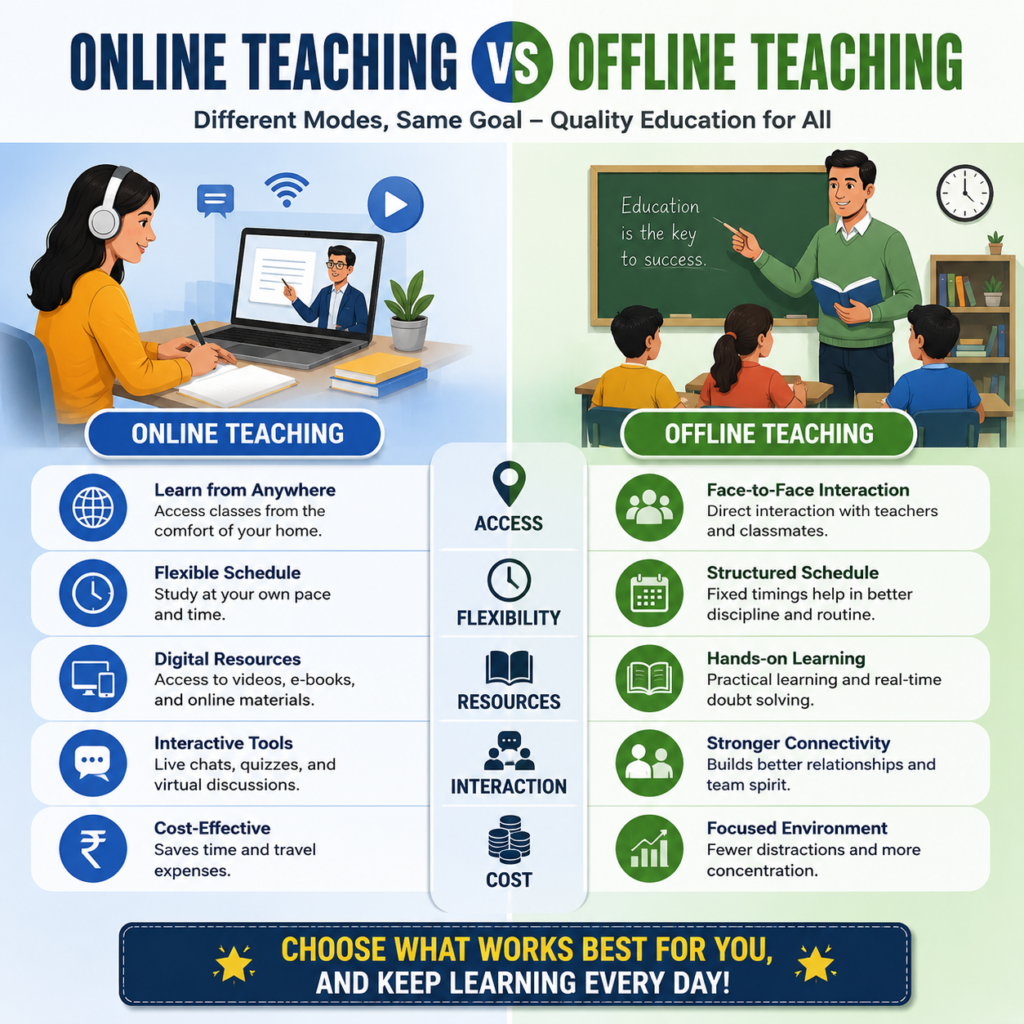
Online Teaching vs Offline Teaching is need to be understand. Online teaching became highly popular during the global pandemic, but its growth continues because of its flexibility and accessibility. Today, students can learn from anywhere in the world using a smartphone, tablet, or laptop. Platforms like virtual classrooms, video conferencing tools, and learning management systems have completely changed the learning experience.
Advantages of Online Teaching
1. Flexibility and Convenience
One of the biggest benefits of online teaching is flexibility. Students can attend classes from home, while teachers can schedule sessions according to different time zones and learning needs. Recorded lectures also help students revisit lessons whenever needed.
2. Global Learning Opportunities
Online education removes geographical barriers. A student in a small village can now learn from expert teachers located in another country. This creates equal learning opportunities for everyone.
3. Technology-Driven Learning
Modern online teaching tools include digital whiteboards, quizzes, AI-based assessments, polls, and interactive presentations. These tools make learning engaging and personalized.
4. Cost-Effective Education
Online learning reduces transportation costs, hostel expenses, and classroom maintenance costs. It also saves time for both teachers and students.

Challenges of Online Teaching
Despite its benefits, online teaching has some limitations.
- Students may face internet connectivity issues.
- Lack of face-to-face interaction can reduce emotional connection.
- Some learners struggle with distractions at home.
- Practical subjects like science labs or sports are difficult to teach virtually.
Teachers also need technical skills to manage digital platforms effectively. Without proper training, online classes may become less interactive and less productive.
The Importance of Offline Teaching
Offline teaching, also known as traditional classroom teaching, has been the foundation of education for centuries. In physical classrooms, students and teachers interact directly, creating a more personal learning environment.
Advantages of Offline Teaching
1. Better Human Interaction
Face-to-face communication allows teachers to understand students’ emotions, body language, and learning behavior more effectively. This helps teachers provide immediate feedback and personalized support.
2. Strong Classroom Discipline
Physical classrooms create a structured learning atmosphere. Students are generally more focused because teachers can monitor attention and participation directly.
3. Social Development
Offline learning helps students develop teamwork, communication skills, leadership qualities, and friendships. Group discussions and classroom activities improve confidence and collaboration skills.
4. Practical Learning Experience
Subjects like chemistry, biology, engineering, fine arts, and sports require hands-on practice. Offline teaching provides labs, workshops, and physical activities that cannot be fully replicated online.
Challenges of Offline Teaching
Traditional classrooms also face several difficulties.
- Students must travel daily, which consumes time and money.
- Learning speed is usually fixed for all students.
- Classroom size can limit personal attention.
- Educational resources may not always be updated quickly.
Additionally, students who miss classes due to illness or distance may struggle to catch up.
Online Teaching vs Offline Teaching: A Comparison
| Feature | Online Teaching | Offline Teaching |
|---|---|---|
| Flexibility | High | Limited |
| Student Interaction | Virtual | Face-to-face |
| Learning Environment | Home-based | Classroom-based |
| Cost | Lower | Higher |
| Practical Activities | Limited | Strong |
| Technology Use | Extensive | Moderate |
| Social Skills Development | Moderate | High |
| Accessibility | Global | Local |
Both teaching methods serve different purposes. Online teaching is excellent for flexibility and accessibility, while offline teaching is powerful for discipline, social interaction, and practical learning.
The Future: Blended Learning
The future of education is likely to combine the strengths of both online and offline teaching. This approach is called blended learning or hybrid learning. Students attend physical classes while also using online platforms for assignments, recorded lectures, discussions, and assessments.
Blended learning offers several benefits:
- Students learn at their own pace.
- Teachers can use digital tools alongside classroom teaching.
- Learning becomes more interactive and engaging.
- Educational content remains available anytime.
Many schools and universities worldwide are already adopting hybrid models to improve student performance and engagement.


Final Thoughts
As an experienced educator, I believe that both online and offline teaching are valuable in modern education. Online teaching brings flexibility, innovation, and worldwide access, while offline teaching builds stronger relationships, discipline, and practical understanding.
The best teaching method depends on the subject, student needs, and learning goals. Instead of comparing the two as competitors, educators should focus on integrating both methods to create a smarter and more effective learning environment.
Education is not limited to a classroom anymore. Whether learning happens through a screen or inside a traditional classroom, the true goal remains the same — inspiring students to learn, grow, and succeed in life.